Visit WAGABOX®
What happens inside
the WAGABOX unit
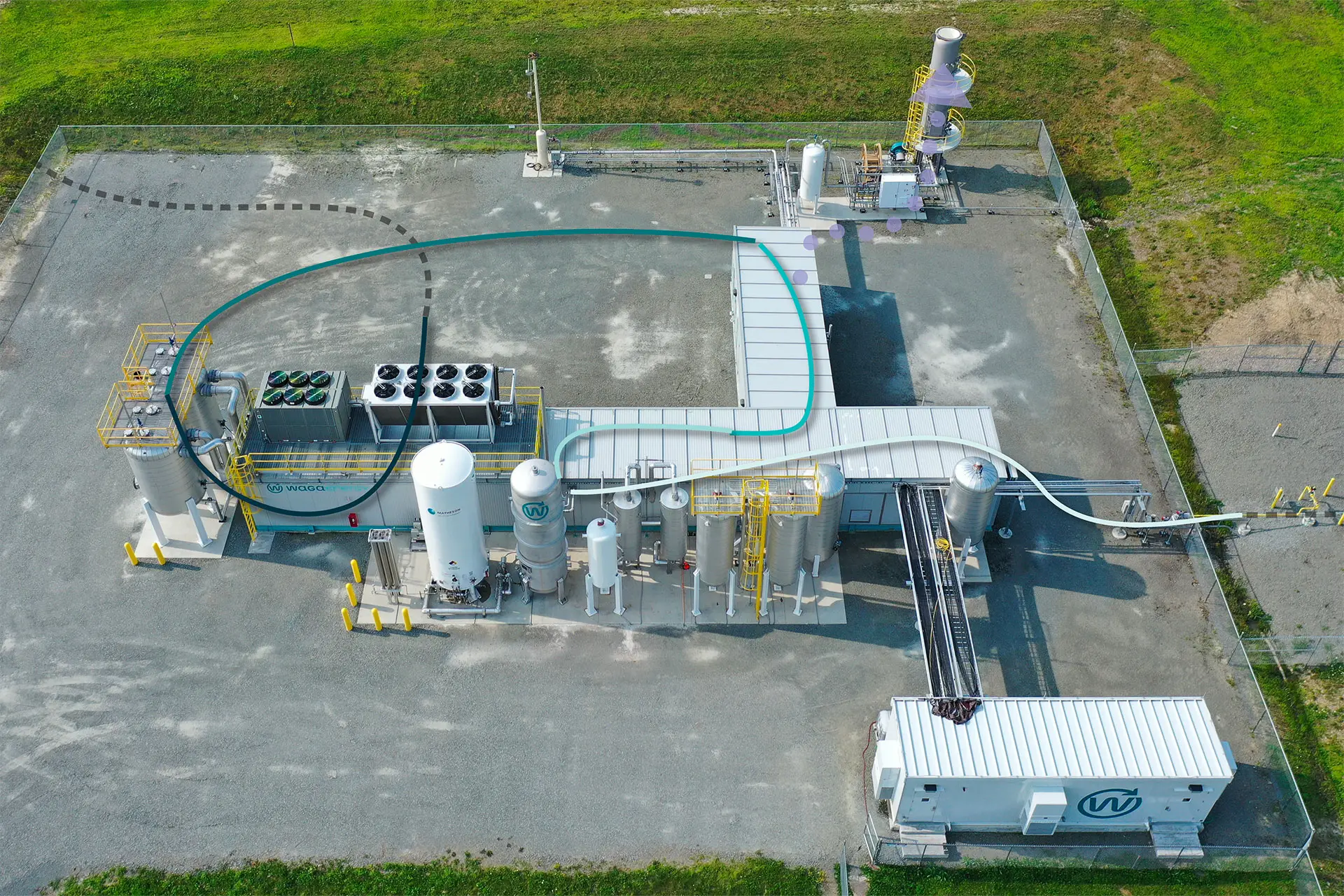
1
1. Biogaz Intake
The raw biogas delivered to the WAGABOX® unit contains methane, carbon dioxide and air (oxygen and nitrogen), and is often heavy with moisture. It also contains traces of other gases, particularly hydrogen sulfide and volatile organic compounds (VOCs). The raw biogas needs to be pretreated before starting methane separation.
2
2. Pretreatment
Before upgrading biogas, the hydrogen sulfide is removed using activated carbon to prevent corrosion, minimize SOx emissions and protect equipment. The biogas is then cooled in a heat exchanger to remove the water through condensation.
3
3. Membrane Compressor
The membrane upgrading module consists of a compressor and sets of membranes, all installed inside a container. The unit separates the carbon dioxide from the other components. The container also houses other equipment: controllers that operate the installation, control valves and another compressor which sends the biomethane to the injection station.
4
4. Elimination of VOCs
The pressure swing adsorption system, or PSA, removes the volatile organic compounds present in the biogas. It comprises three vessels mounted side-by-side which contain different adsorber beds.
5
5. Membraine Filtration
Compression is raised followed by gas cooling, drying and oil removal. The CO2 is removed with 2 stages of polymeric membranes.
6
6. Pressure and temperature swing adsorption
The pressure and temperature swing adsorption system, or PTSA, removes any residual traces of carbon dioxide from the biogas before cryogenic distillation to prevent “dry ice” from being formed. The PTSA consists of two vessels which contain microporous adsorbents and operate alternately: when one vessel is in the adsorption phase, the other is regenerating.
7
7. Cryogenic Distillation Unit
The cryogenic distillation unit separates the methane from the nitrogen and oxygen contained in the biogas. It consists of a distillation column and a heat exchanger. A small amount of liquid nitrogen is used, particularly during the start-up phase. The biogas is cooled to -161°C (112K) to liquefy the methane, which is recovered through gravity, whereas air gases are sent to the oxidizer.
8
8. Injection Station
At the end of the upgrading process, the methane is 98% pure: landfill gas has become Renewable Natural Gas (RNG). RNG is transported to the grid operator’s injection station. The station contains equipment for checking the compliance of the RNG with injection requirements, odorizing the gas to help detect leaks should they occur, and measuring the volume injected.
Thermal oxidizer
The thermal oxidizer is used to burn off the different gas flows generated by the landfill gas upgrading process (particularly those containing VOCs) to prevent the emission of pollutants into the atmosphere.