Federal policy continues to limit domestic demand growth for Renewable Natural Gas (RNG), but emerging international markets are showing strong potential for expansion in the years ahead.
The D3 RIN market has strengthened in recent weeks, with prices rebounding to levels last seen in May. While the EPA has delayed approval of future Renewable Volume Obligations (RVOs) until December, the agency continues to make progress on reallocating Small Refinery Exemptions (SREs)—a development that could help stabilize compliance markets and improve pricing visibility heading into 2026.
However, uncertainty around federal incentives impacting RNG economics, combined with limited growth in compressed natural gas (CNG) fueling infrastructure, continues to weigh on domestic demand. As a result, market participants are increasingly turning their focus to international opportunities.
Several global markets are in advanced stages of policy and infrastructure development that will soon require large volumes of RNG - demand that U.S. producers are well positioned to meet given abundant domestic supply and growing export capabilities.
One of the more promising opportunities lies within the maritime sector. The International Maritime Organization’s (IMO) proposed Net-Zero Framework seeks to increase near-term emission reduction targets and achieve net-zero emissions in international shipping by 2050. RNG, in the form of bio-LNG, is expected to play an important role in this transition as a drop-in fuel for existing LNG-powered vessels.
Although the formal vote to adopt the IMO framework has been postponed until 2026, ongoing policy work suggests continued momentum toward recognizing RNG as a viable decarbonization pathway for the shipping industry.
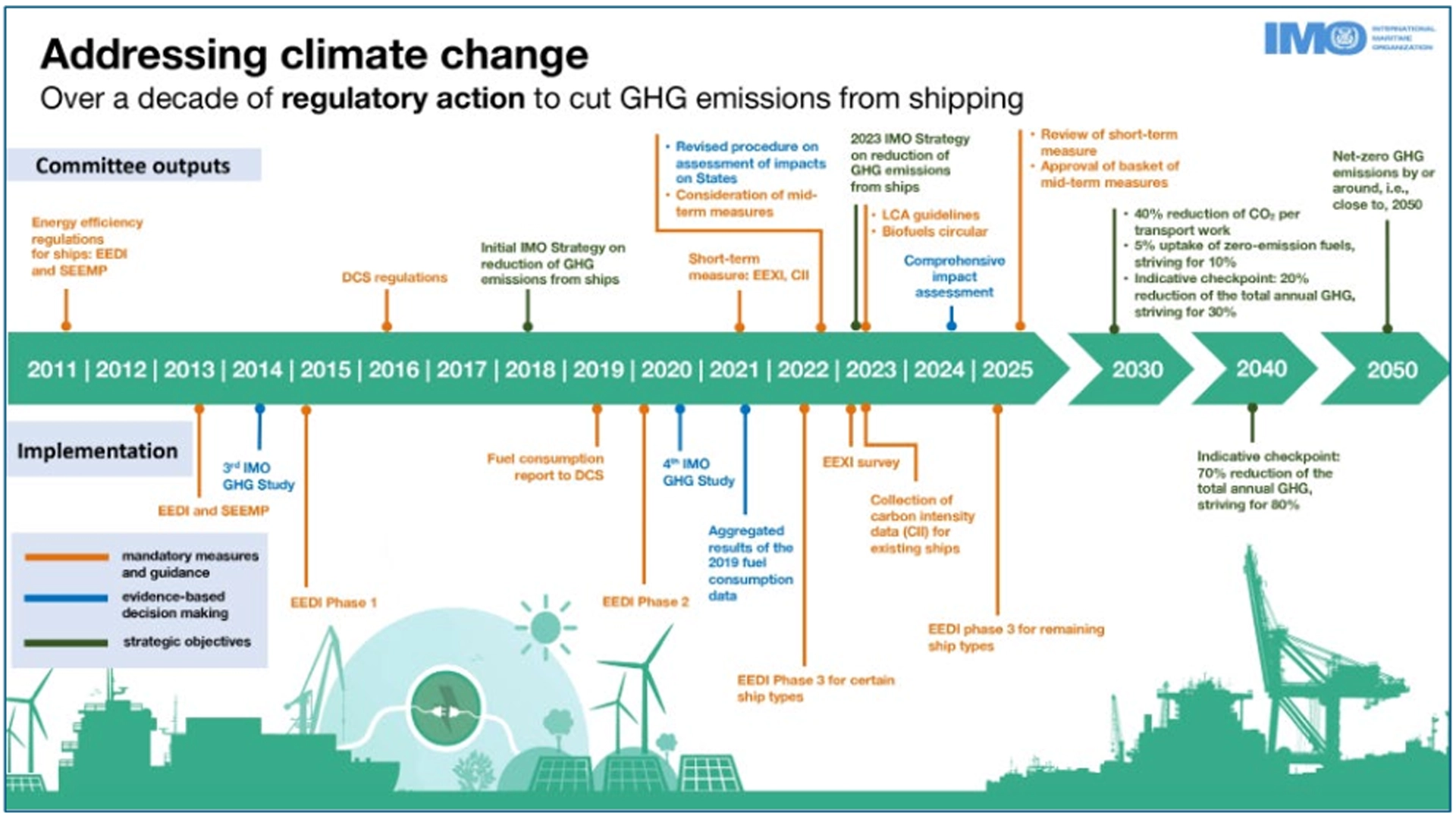
Timeline of key International Maritime Organization (IMO) regulations and strategies to reduce greenhouse gas emissions from global shipping between 2011 and 2050.
If adopted, the framework would mark a major milestone for RNG, positioning the fuel as a key contributor to global emissions reduction goals and establishing shipping as a new and significant demand driver.
Together with growing international policy support, these developments signal expanding long-term opportunities for RNG producers and investors, even as the domestic market continues to face policy and infrastructure challenges.
At a glance

International Markets Driving RNG Growth
Growing global demand, supported by advancing policies and infrastructure, is opening strong new opportunities for RNG deployment beyond national borders.

Strengthening Market Signals for RNG
Improving compliance mechanisms and regulatory progress are enhancing market clarity and reinforcing confidence in RNG as a long‑term energy solution.

Maritime Transport as a New Growth Engine
Global decarbonization efforts in shipping are positioning RNG (as bio‑LNG) as a practical, drop‑in fuel, creating significant future demand and expanding the role of RNG in global emissions reduction.
Contact our experts