Ralph Waldo Emerson is credited with saying, “A foolish consistency is the hobgoblin of little minds.” I think we can agree that consistency is mostly a good thing, especially as it relates to trust and relationship issues. But foolish consistency, which I’ll define as consistency for consistency’s sake, might be one of the biggest problems facing the world today.
I realize this is a whopper of a statement, but please allow me to unpack it a bit before you click to the next item in your feed. If you’re reading this, chances are you’re in the RNG industry, a related industry such as solid waste management or agriculture, or perhaps you just care about greenhouse gas (GHG) emissions and ideas on how to better mitigate them. Here’s the hook: methane emissions are a much larger problem than most of us are aware, and a “foolish consistency” is preventing this from becoming widely known.
If you’re in one of the target groups mentioned above, here are some things you probably already know:
- Methane causes much more warming on a pound-for-pound, ton-for-ton basis than carbon dioxide does,
- Methane lasts a much shorter time in the atmosphere after it’s emitted than carbon dioxide does (methane will break down after around ten to f ifteen years, whereas carbon dioxide lasts for hundreds, possibly thousands of years after it’s been emitted),
- Due to the greatly different lifetimes between methane and carbon dioxide, a conversion factor known as global warming potential (GWP) is used to report the warming impact of methane in terms of carbon dioxide equivalent, or CO2e,
- There are two common time horizons that are considered when determining the GWP factor to be used—20-year (GWP20) and 100-year (GWP100),
- The GWP100 conversion factor is around 25-30 (29.8 according to IPCC AR6), and
- The GWP20 conversion factor is even higher, around 80-85 (82.5 per IPCC AR6).
Here’s where the foolish consistency comes in. Almost universally, whenever GHG inventories are conducted or the warming contributions of various GHGs are reported, the GWP100 methane conversion factor is used. Why is this?
I admit, 100 is a much more appealing number than 20. 100 fits in nicely with the metric system, it’s the occasion for centennial celebrations of all kinds, it’s easier to multiply by than 20, and if you get a “100” on an exam, that’s considered perfection. I could probably come up with 100 reasons why it’s a more appealing number than 20, and only one against it: My mom is 98.33 years old; ask her if she’d rather be 100 or 20.
Both the 100-year and the 20-year horizons are arbitrary choices; the people who wrote the GHG accounting rules could have just as easily chosen three years, one month, and 21 days (GWP3.14) as the standard. Given this or other potential alternatives, I’ll give my general support for the 100-year and 20-year values as well, but why is the 100-year horizon almost always used for official GHG accounting purposes instead of the 20-year horizon?
The choice of time horizon for GHG accounting can be compared to the choice of term for a home mortgage. Like GWP time horizons, there are two common and mostly arbitrary mortgage terms available—30-year and 15-year. While there’s no universal “right” choice for a home mortgage length, most people understand there are more appropriate and less appropriate choices based on given situations. For example, for a young family buying their first home and wanting to make sure they can comfortably pay their bills, the smaller monthly payments of a 30-year mortgage would typically be more appropriate than a 15 year loan with larger monthly payments. For an older family with lots of cash available for a vacation home, most of us would agree that a 15-year term might be more appropriate. In the same way, people should consider the circumstances when choosing the most appropriate time horizon for GWP factors used in GHG accounting.
Speaking of circumstances, I can clearly remember back to 1975 when nobody was thinking about climate change or global warming. There may have been a handful of scientists who understood the concept of greenhouse gases trapping heat in the earth’s atmosphere, but in 1975 global temperatures were random, one year could be cooler or warmer than the historic average, and the ten warmest years on record weren’t 1965 through 1974. Concentrations of GHGs may have been slightly higher than pre-industrial levels, but they hadn’t yet climbed to the point where climate patterns were being dramatically transformed as we watched from one year to the next. During the 1980s and 1990s when global warming was coming into focus, on the distant horizon I might add, the choice of the 100-year period was somewhat defensible given the greater popularity of the number 100 as mentioned above.
Fast forward to 2025: ask your AI bot for a list of the ten warmest years on record and see what it tells you. Does anyone want to bet that 2025 (or 2026, 2027…) won’t be one of the five warmest years since records have been kept? (My email address is gary.freymiller@waga-energy.com; donations, I mean wagers, of all sizes will be accepted.) Just like the two families considering home mortgages, the circumstances back when the GHG accounting rules were being written and those today are very different and should be considered when determining the time horizon used to compare the heating impacts of methane to carbon dioxide.
I’ve been in numerous professional situations where methane accounting was being performed, and every time I would ask, “Should we consider using GWP20 instead of GWP100, you know, given the hotness of the world today?” Every time…EVERY time, the response has been, “People have always used the GWP100 value for GHG accounting; GWP20 is an interesting thought, but we want our inventory to be consistent with all the others."¹ To me this is the epitome of foolish consistency in action.
I can hear you now, “Does it really matter?” To which I respond, “Does anything really matter?” If you answered “no” to the latter, feel free to stop reading now, or keep reading…. I would answer “yes” and “yes.” Using the 20-year time horizon puts greater emphasis on the near-term heating caused by methane emissions. Using the 100-year GWP kicks the methane can down the road, distributing its heating impact over an 85-year window when the methane that was emitted isn’t even in the atmosphere anymore. By continuing to use the GWP100 value, we’re fooling ourselves into thinking that methane isn’t as big a present problem as it really is.
Practically speaking, if we use the GWP100 conversion factor, methane accounts for less than 30% of total global warming. If we use the GWP20 factor, methane is responsible for close to 45% of total global warming. From a mitigation perspective, if the GWP20 factor is used instead of the GWP100 factor, projects that capture² and destroy methane are nearly three times as valuable. Does it really matter, or is it more important to be consistent?
And in case you’re wondering what you can do about methane emissions, here’s a short list of action items:
- Raise awareness of the GWP20/GWP100 issue and lobby for adoption of GWP20 wherever possible
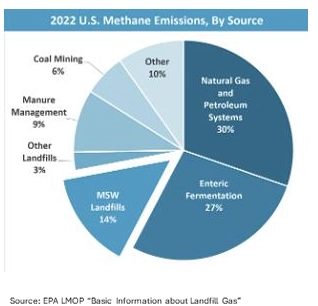
- Consume less beef and dairy; enteric cattle gas is a major source of methane emissions: the 2nd largest source as of 2022
- Electrify your household; there are a small number of uses for methane that are difficult to electrify—none of these are found in typical American homes. The Oil & Gas industry is the largest source of methane emissions; avoid whenever possible.
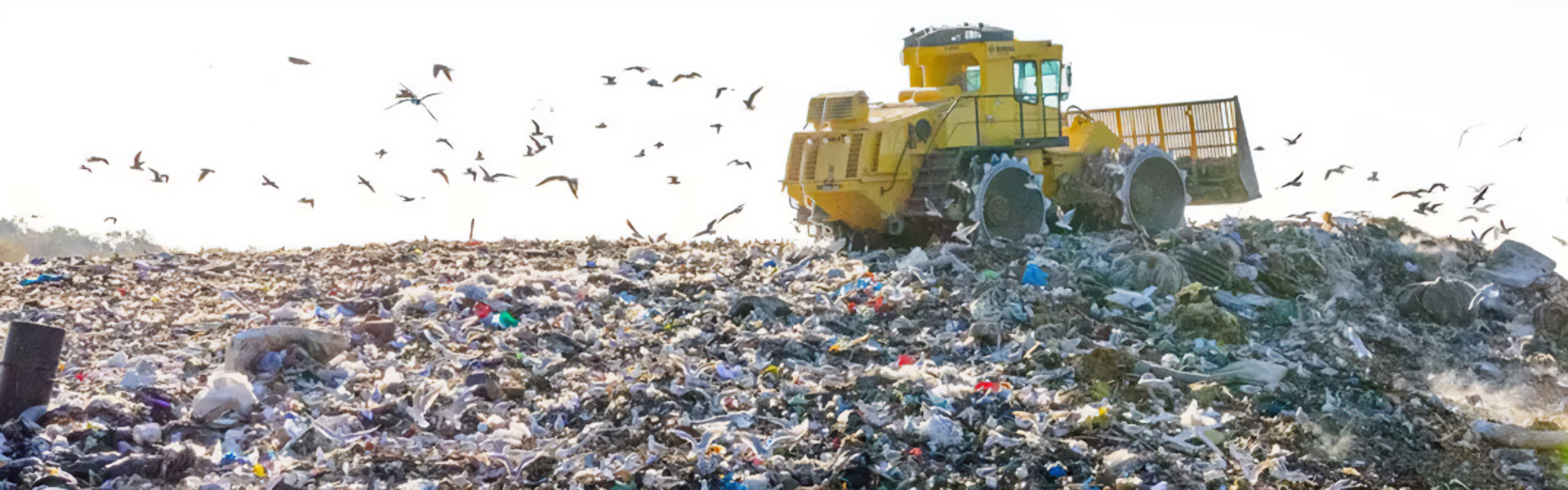
- Support landfill gas recovery and organic diversion programs.
At a glance

Methane Is a Much Bigger Near‑Term Climate Driver Than We Acknowledge
Methane warms the planet far more powerfully than CO₂ in the short term, but this impact is often understated because emissions are usually reported using a 100‑year global warming potential instead of a 20‑year one.

“Foolish Consistency” Masks the Real Impact of Methane
The widespread use of the 100‑year warming metric persists mainly for consistency’s sake, even though today’s climate conditions make the 20‑year metric far more relevant for understanding and prioritizing mitigation efforts.

Choosing the Right Metric Changes Climate Action Priorities
Using a 20‑year perspective dramatically increases the perceived value of methane mitigation projects, making actions like landfill gas recovery, RNG production, dietary shifts, and reduced fossil gas use even more critical.
Contact our experts