Smaller landfills remain largely unexploited
The renewable natural gas (RNG) market in the United States is expanding rapidly, driven by environmental regulations and demand for low-carbon fuels. However, most landfill gas (LFG) upgrading projects in the U.S. have focused on large sites producing over 1,500 scfm of biogas. Smaller landfills—despite being numerous—remain largely unexploited due to technical and economic constraints.
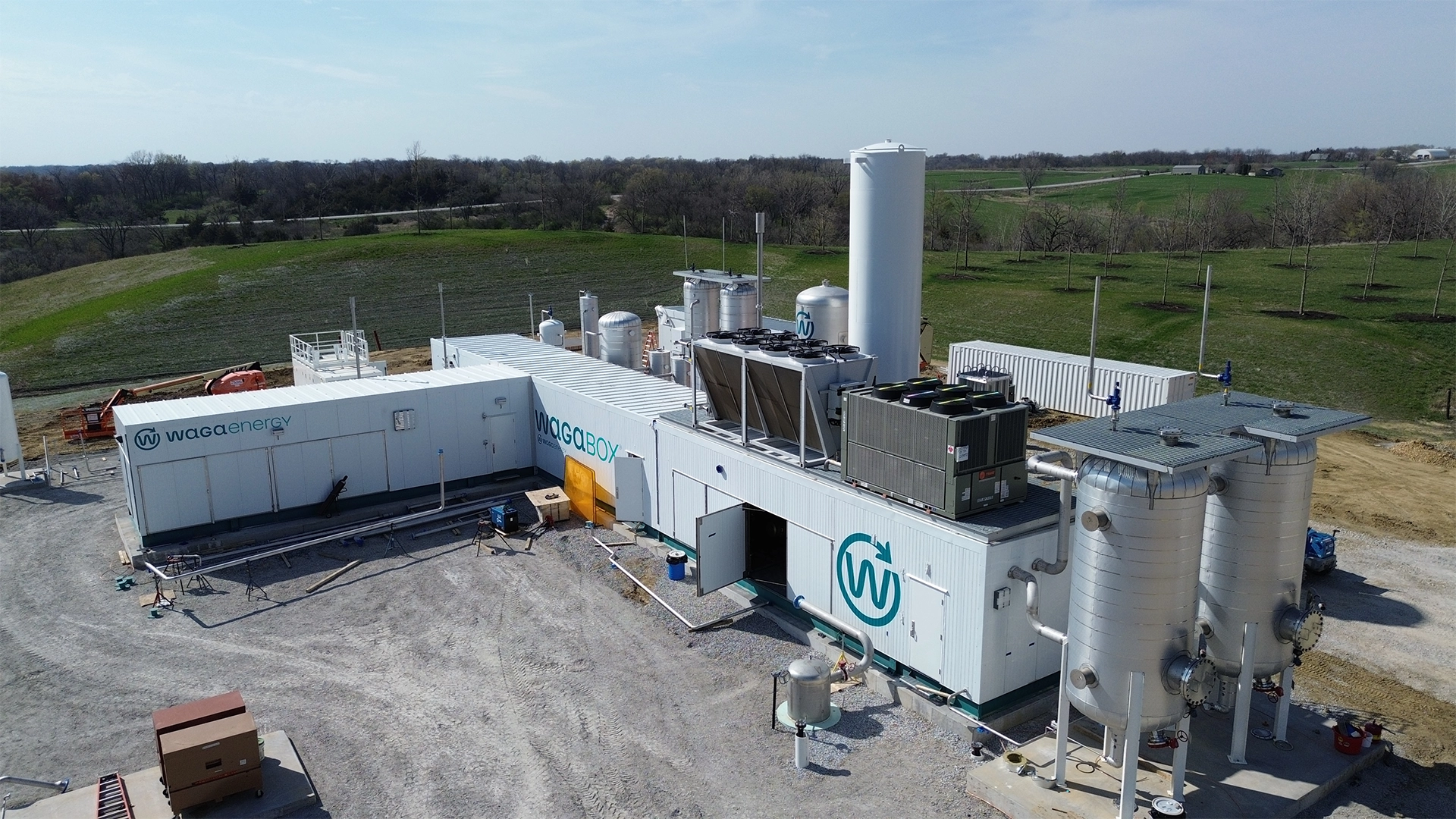
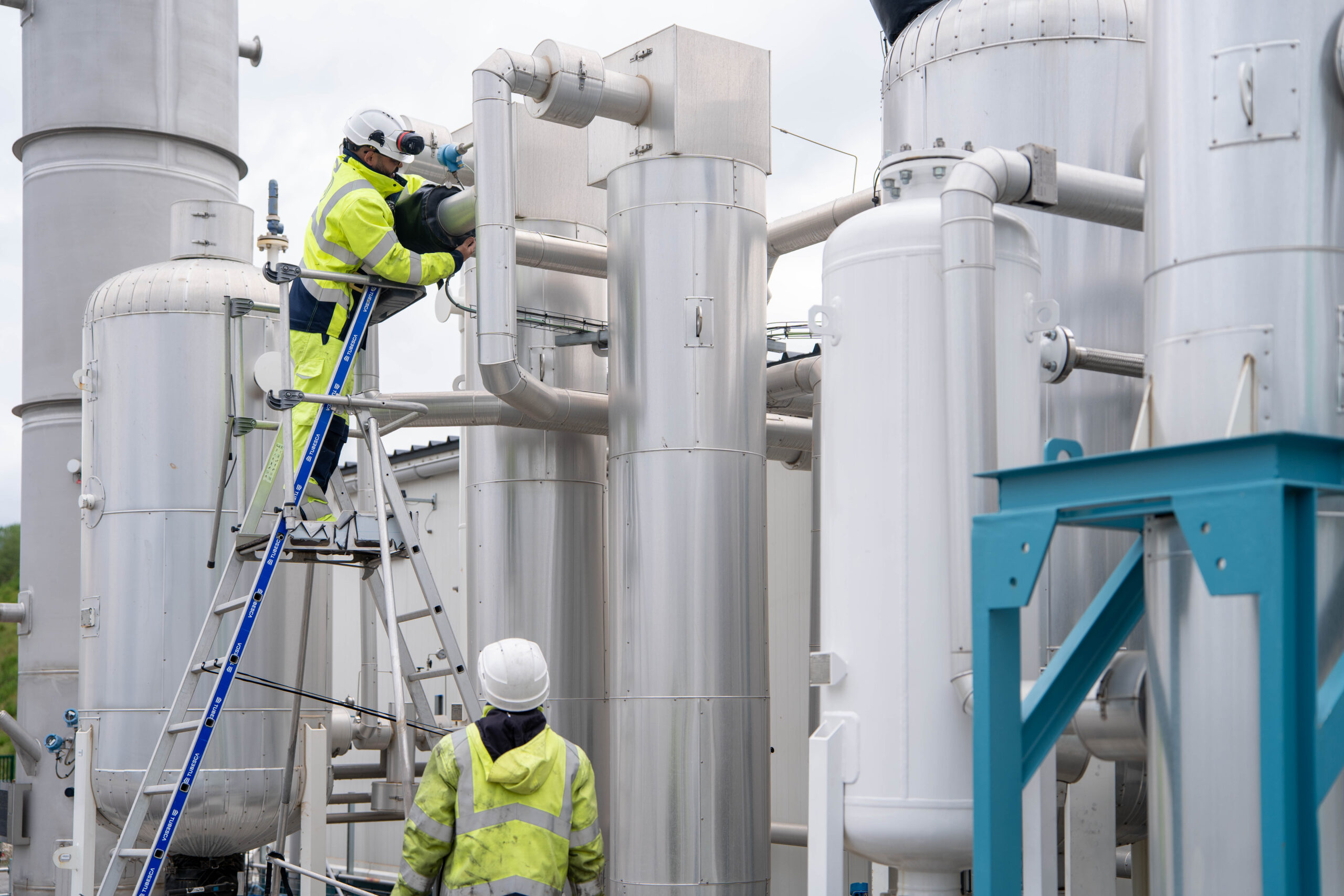
WAGABOX® unit at the Scott Area Landfill in Iowa, demonstrating the viability of renewable natural gas production at small‑scale landfill sites while reducing methane emissions.
Yet, the U.S. landfill landscape is largely composed of small to mid-sized sites, many of which generate lower and more variable volumes of gas. These sites often face structural barriers to RNG development, including higher unit costs, fluctuating gas quality, and technical challenges such as elevated nitrogen and oxygen content. As a result, despite their significant cumulative potential, smaller landfills remain underexploited and represent an untapped opportunity for scaling RNG production nationwide.
Waga Energy’s WAGABOX® technology, recently deployed in the U.S., addresses this gap. Based on a combination of cryogenic separation and membrane filtration, the system can process LFG with high variability in composition, including elevated nitrogen (up to 30%) and oxygen (up to 3.5%). Unlike many upgrading systems in the U.S. market,WAGABOX® offers the flexibility to operate economically across a broader range of landfill sizes and gas qualities, making it particularly well-suited for smaller sites.
Two recent projects illustrate its application:
1) Steuben County, NY: In operation since March 2024, this is the first WAGABOX® unit injecting RNG into the U.S. grid. The landfill generates around 900 scfm of biogas—unusually low by U.S. standards. The project was made possible by a 20 year gas rights agreement and required less than 0.5 hectares of space. A previous LFG-to-energy system was decommissioned in 2019 for economic reasons.
2) Scott Area, IA: Scheduled to begin injection in August 2025, this project also involves a landfill producing less than 1,000 scfm of biogas. In this case, Waga Energy co invested in upgrading the landfill gas collection system, improving methane capture and enabling project viability. This also reduces fugitive methane emissions.
Both cases demonstrate the potential to extend RNG production to small-scale landfills previously excluded from the RNG value chain. The standardized design of the WAGABOX® unit allows relatively fast implementation—between 18 and 24 months— depending on site conditions and permitting timelines.
These deployments suggest a new technical pathway for enhancing methane recovery from smaller landfills in the U.S., with implications for both GHG mitigation and renewable fuel supply.
At a glance

The Challenge: Unlocking Smaller Landfills
In the U.S., most RNG projects focus on large landfills above 1,500 scfm, leaving many smaller sites underutilized due to variable gas volumes and complex compositions.

The Solution: Adapted Technology
WAGABOX® technology can treat highly variable landfill gas, including up to 30% nitrogen and 3.5% oxygen, making RNG production viable across a much wider range of landfill sizes.

Proven in the Field
Projects such as Steuben County (~900 scfm) and Scott Area (<1,000 scfm) demonstrate that smaller landfills can successfully produce RNG, with fast deployment timelines of 18 to 24 months.
Contact our experts
Tanguy Largeau
Vice President, Business Development & Commercial