How WAGABOX® Technology Makes Biomethane Viable on a Mid-Sized Landfill
Not every landfill is large enough to justify a renewable energy project. On smaller and mid-sized sites, the volume and variable quality of landfill gas have long made recovery projects difficult to finance and operate profitably. At the Scott Area Landfill in Davenport, Iowa, Waga Energy demonstrated that its WAGABOX® technology changes that equation — turning a mid-sized municipal landfill into a lasting source of renewable energy for the local community.
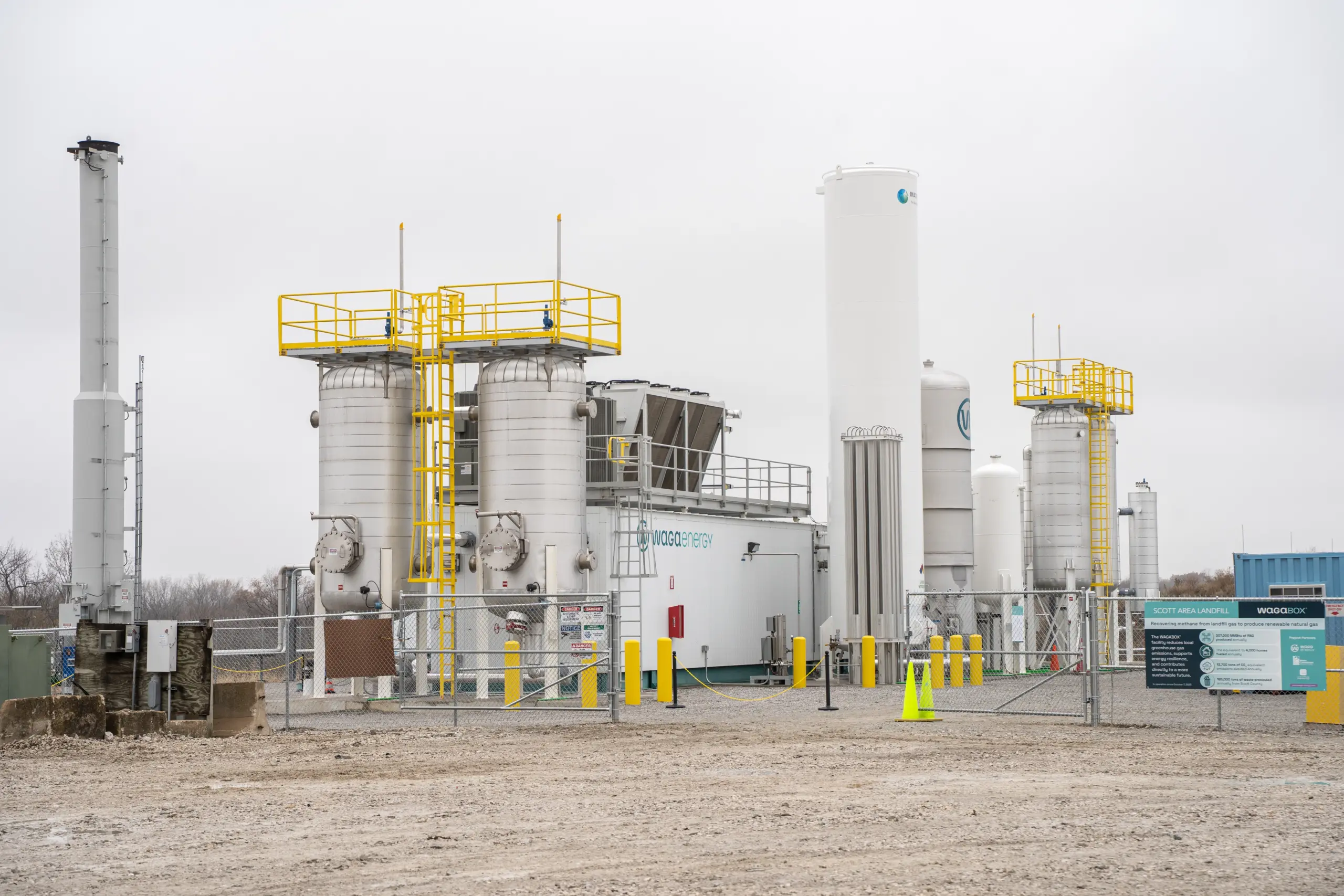
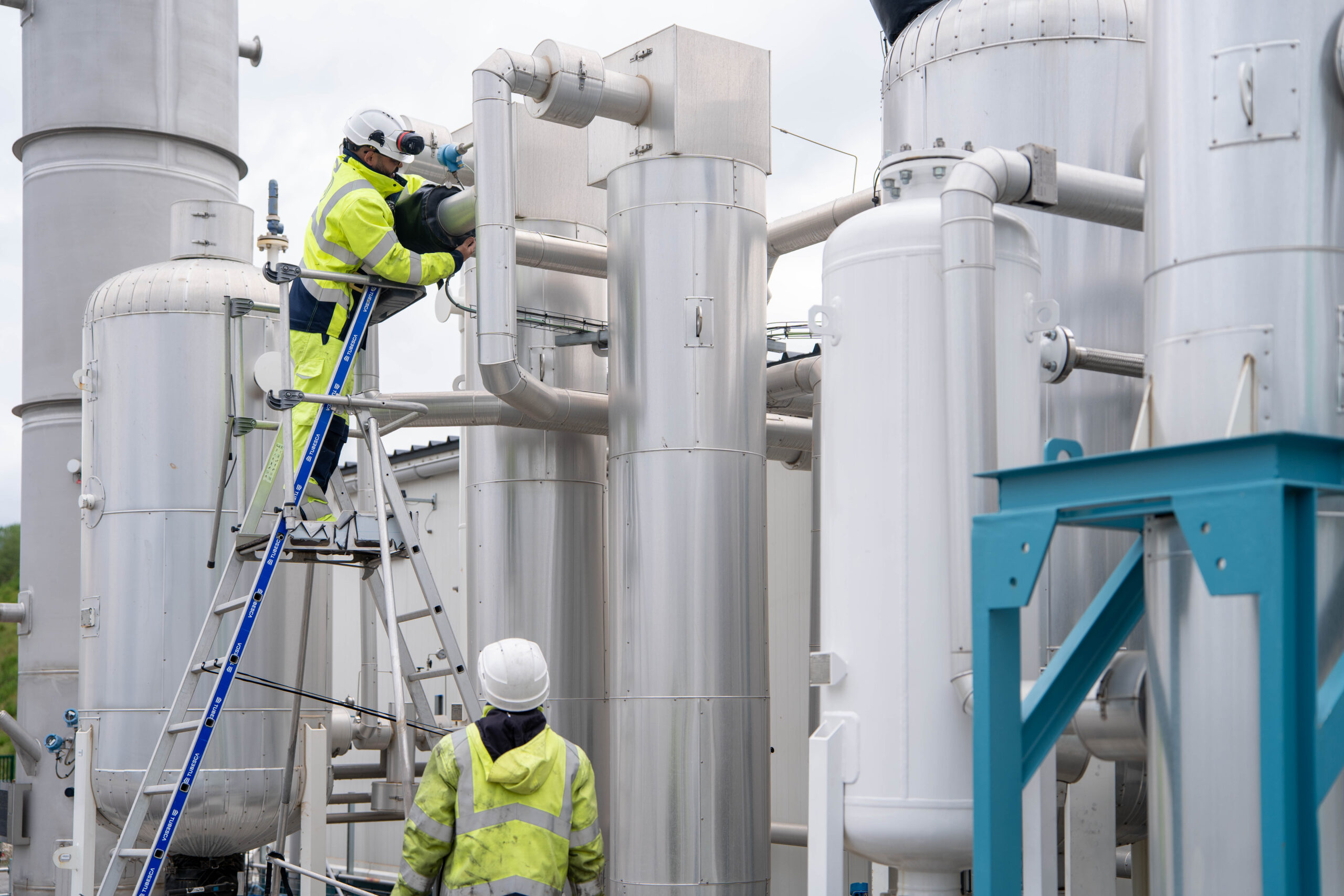
The WAGABOX® unit at the Scott Area Landfill in Davenport, Iowa.
Unlocking the Potential of a Mid-Sized Landfill
The Scott Area Landfill, operated by the Waste Commission of Scott County, processes around 185,000 tonnes of waste each year from 17 communities across the county. Like every landfill, it naturally generates gas as waste decomposes — a resource rich in methane, but also a source of greenhouse gas emissions if left unmanaged.
On a site of this scale, however, converting landfill gas into a marketable renewable fuel is far from straightforward. The gas is produced in more modest volumes than on very large landfills, and its composition can vary over time, with significant levels of nitrogen and oxygen. Most upgrading technologies lose efficiency under these conditions, which has historically made mid-sized sites economically unattractive for renewable natural gas (RNG) projects.
The objective for Scott County was therefore to find a partner able to recover this gas reliably and profitably over the long term — without the county having to become an investor, technology provider or plant operator itself.
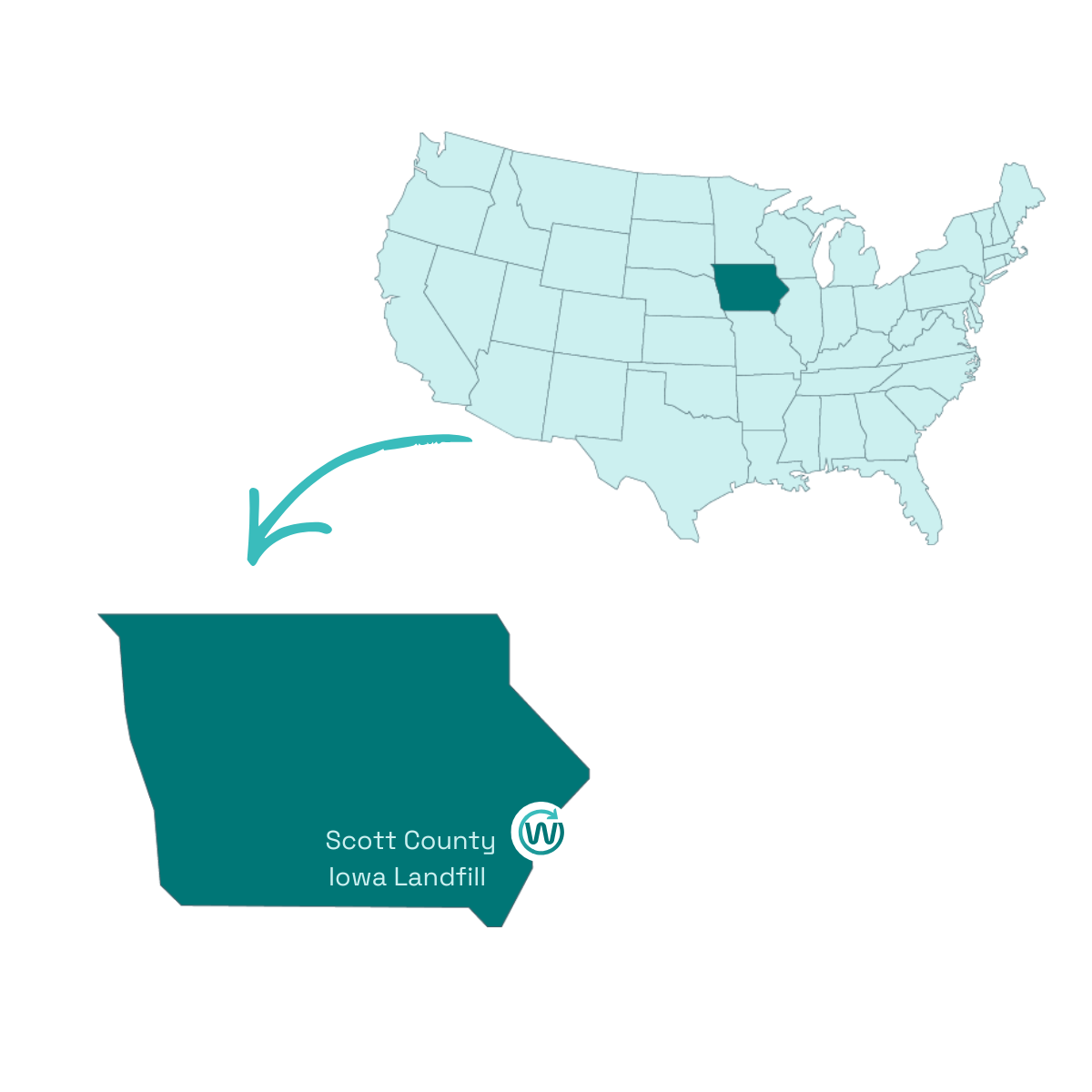
Location of the Scott County Landfill in Iowa, USA.
A Technology Designed to Perform Where Others Cannot
Waga Energy responded with an integrated model built around its patented WAGABOX® technology — and financed, built, owned and operates the unit under a 20-year agreement, sharing revenues with the Waste Commission of Scott County and Linwood Mining and Minerals, the owner of the site.
What makes the WAGABOX® particularly suited to sites like Scott Area is the robustness of its process. Combining membrane filtration and cryogenic distillation, it removes carbon dioxide, then isolates methane from the nitrogen and oxygen that pollute landfill gas. Unlike technologies that require low nitrogen content to operate efficiently, the WAGABOX® maintains high methane-recovery performance even with variable gas quality, and continuously adapts to changes in flow and composition while keeping the biomethane at pipeline-quality purity.
This resilience is precisely what makes renewable energy production viable on smaller and mid-sized landfills — sites that would otherwise be left out of the energy transition. As Guénaël Prince, CEO of Waga Energy Inc., put it, the project "demonstrates Waga Energy's expertise, through its innovative technology, to develop RNG projects on smaller landfills."
At Davenport, the biomethane produced is injected directly into the MidAmerican Energy pipeline, delivering a local, renewable alternative to fossil natural gas.
Local Renewable Energy and Measurable Climate Impact
Commissioned in October 2025, the WAGABOX® unit at the Scott Area Landfill produces more than 205,000 MMBtu of biomethane annually — around 60 GWh, equivalent to the energy contained in roughly 1.5 million gallons of diesel fuel.
By capturing methane and substituting fossil natural gas, the project avoids approximately 15,800 tonnes of CO₂-equivalent emissions every year.
Beyond the figures, the facility shows how a mid-sized landfill can become a genuine community asset — producing clean, locally sourced energy while advancing the county's environmental goals. Bringing together the Waste Commission of Scott County, Linwood Mining and Minerals and Waga Energy — alongside the American Biogas Council at its November 2025 inauguration — the project stands as a replicable model, directly relevant to the many similar sites still waiting to unlock their renewable potential.
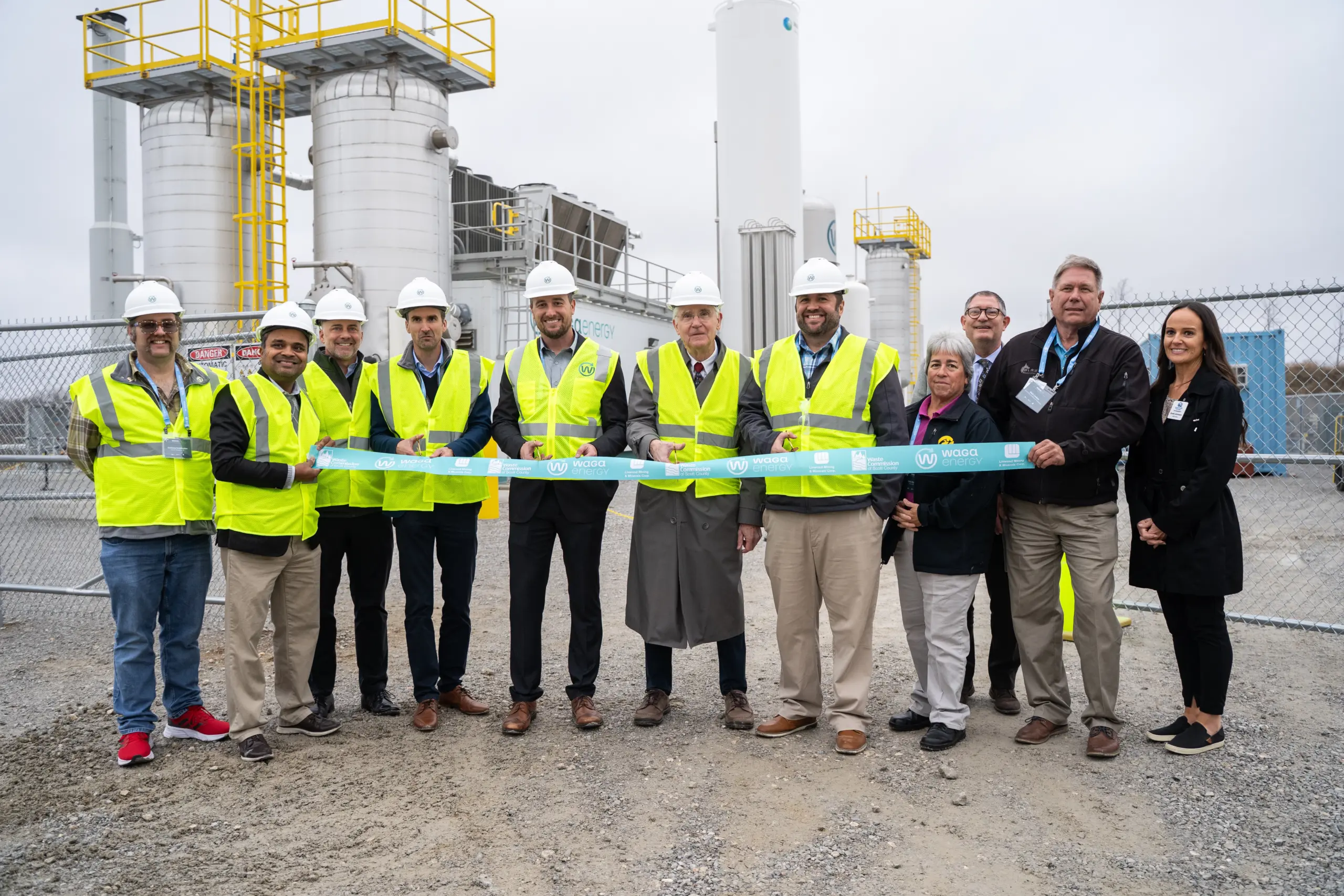
Ribbon cutting during the inauguration of the Scott Area WAGABOX® unit.
Key Facts
- Location: Davenport, Scott County, Iowa, United States
- Landfill operator: Waste Commission of Scott County
- Landfill owner (site): Linwood Mining and Minerals
- Project developer, owner and operator: Waga Energy (20-year agreement)
- Technology: WAGABOX® landfill gas upgrading unit
- Capacity: 1,000 scfm of landfill gas
- Annual biomethane production: More than 205,000 MMBtu (around 60 GWh)
- Grid connection: MidAmerican Energy pipeline
- Emissions avoided: Approximately 15,800 tonnes of CO₂-equivalent per year
- Waste processed on site: Around 185,000 tonnes per year, from 17 communities
- Commissioning: October 2025 (inaugurated November 2025)
"Waga Energy was the first organization we met with an appropriate process to valuing the resources of our community."
1k
scfm of landfill gas upgraded into renewable natural gas
15,8k
tons of CO₂ equivalent emissions avoided annually
205k
MMBtu of RNG injected directly into MidAmerican Energy's network annually
Waste Commission of Scott County, Linwood and Waga Energy Commission RNG plant at Scott County Iowa Landfill
RNG Facility Inaugurated in Iowa
At a glance

New RNG facility launched in Iowa
Waga Energy installs a 1000 scfm WAGABOX® unit at Scott Area Landfill, converting waste gas into renewable natural gas.

Strong environmental impact
The project produces over 205,000 MMBtu/year and avoids ~15,800 tons of CO₂ emissions annually, supporting regional decarbonization goals.

Circular economy in action
The project transforms 185,000 tons of yearly waste from 17 municipalities into clean, pipeline-quality energy, showcasing scalable waste-to-energy innovation.